

Innovation projects begin long before the proposal is submitted – with preparing a draft and bringing together a project team. Rarely can such projects be implemented successfully within a single organisation. In the European context, this is why the principle of action called interactive innovation – specifically, the Multi-Actor Approach (MAA) – is essential.
Involvement is essential
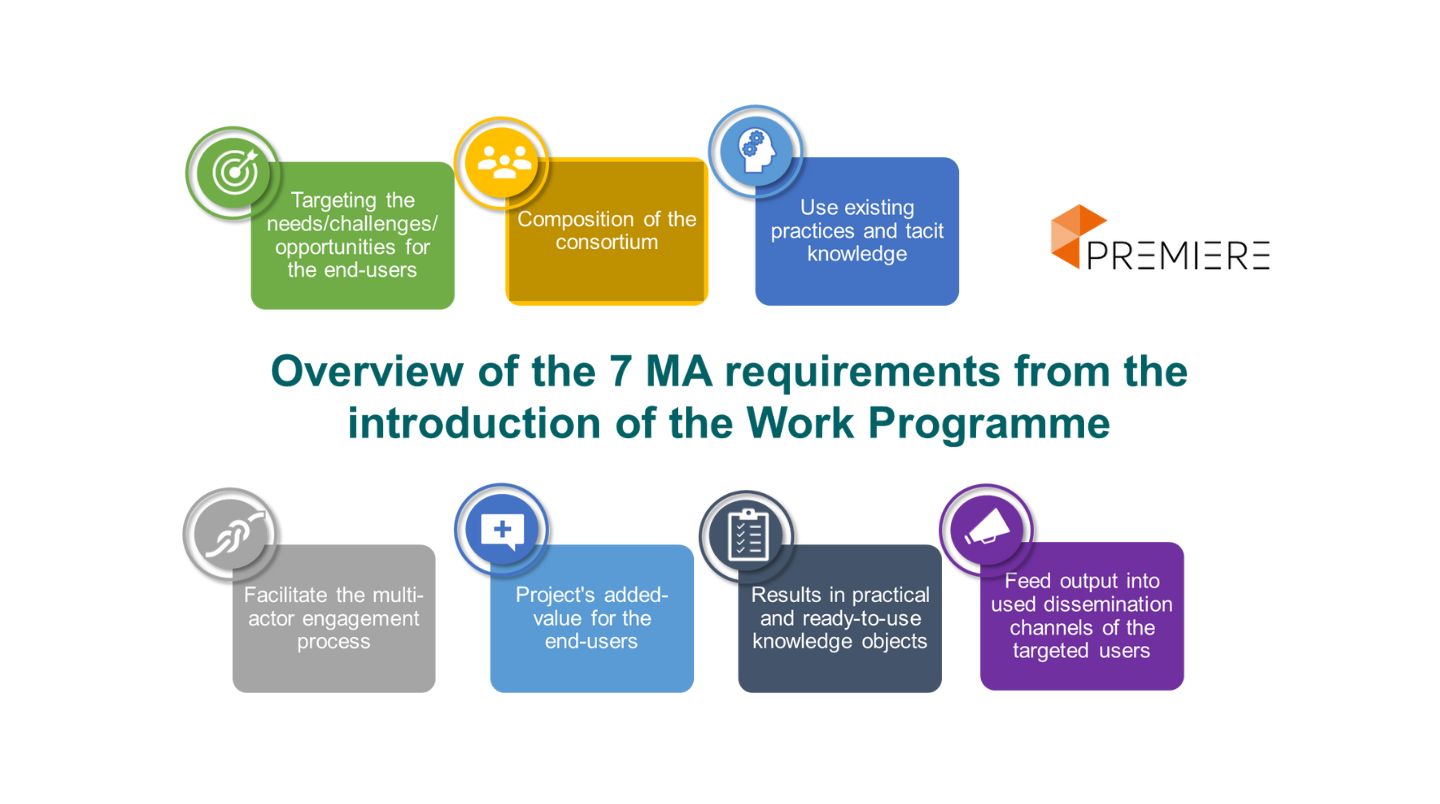
The MAA means that researchers, policymakers, farmers, entrepreneurs, and other practitioners work together from the very beginning of the project idea through to its implementation. This inclusive collaboration is key to ensuring that research responds to real needs and results in practical, usable solutions.
To help applicants understand and apply the MAA requirement, the PREMIERE project was launched. The project offers practical value, in particular, to those organisations and proposal writers who wish to participate in Horizon Europe calls but need support in developing suitable partnerships or involving multiple parties. PREMIERE supports both experienced and new applicants by providing easy-to-use tools that help design substantively stronger and user-centric project proposals.
The most important goal of the PREMIERE team is to put the MAA principle into practice. This means that grassroots organisations and communities – for whose benefit the projects are implemented – are meaningfully involved from the development of the idea to the delivery of results.
According to Maarja Pikkmets (Kodukant Läänemaa), joining PREMIERE gave a small organisation a unique opportunity to enter the European research and development network. “We’re contributing our experience in funding distribution to help design a tool that can support other small practitioner organisations like ours to access Horizon Europe,” she explained. According to her, PREMIERE’s strength is its multi-level impact. “It is important that those from whom the projects are intended are actually involved from the beginning. PREMIERE provides concrete ways to make this happen.”
Tools for practicing collaboration
Guidelines and tools for proposal writers help them to understand the requirements and assess whether all aspects of multi-actor engagement are addressed in the application, as well as which activities and roles need to be specified.
To find partners, you can use the special Consortium Builder Tool , which helps to form a balanced consortium. Collaboration skills can be practiced with the role-play “MAMY” , where participants take on the roles of different actors, make decisions and work towards a common goal in complex collaborative situations.
It is also valuable to learn and exchange experiences. PREMIERE has developed a series of webinars, available on its YouTube channel , which introduce the principles of the MAA, share project experience stories, evaluators’ perspectives, and help participants find partners .
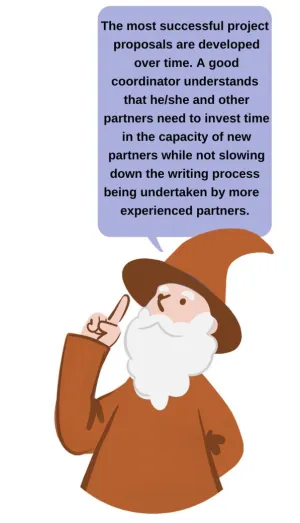
In addition, four cartoons have been produced that illustrate how to build successful multi-actor proposals by presenting common mistakes and lessons learned in an engaging visual format. The PREMIERE 100+ Club on LinkedIn also helps expand cooperation opportunities by bringing together both experienced and new actors from across Europe.
All materials are collected in the PREMIERE Information Hub – an interactive directory where you can easily find relevant guides, explanations of evaluation criteria, Horizon Europe administrative and funding information, and practical tools for preparing applications. This is not a final list of tools, as new tools are continuously being developed.
The greatest value of the PREMIERE project lies in the versatility of its tools – from computer games and cartoons to an online academy and stakeholder engagement strategy guidelines. This diverse selection ensures that everyone can find something suitable and functional for their needs.
Join the conversation in the project world
PREMIERE focuses on improving the quality of multi-actor projects and highlighting the impact these projects aim to achieve. From the perspective of end-users, all activities target three groups: policymakers, project coordinators, and, above all, practitioner organisations. Precisely those, who represent the grassroots level and for whom the results are most directly intended.
The value of PREMIERE for Estonia lies in the opportunity to strengthen international cooperation, increase the participation of Estonian research and development institutions and NGOs in Horizon Europe projects, and ensure that the real needs of communities are taken into account in research. Ultimately, this contributes to smarter, more inclusive and more sustainable rural development.
Multi-actor approach is one of the core requirements for Horizon Europe (HEU) projects, but it is often also the biggest challenge. Involving diverse stakeholders is essential to ensure that research solutions address real needs and are turned into practical solutions. These recommendations can help with making this process smoother and more effective,“ says Hanna Tamsalu, Development Manager at METK’s Department of Knowledge and Innovation Services.
PREMIERE is a pan-European cooperation network, but closer cooperation takes place at the regional level. To join the activities of the Nordic-Baltic region, contact Hanna Tamsalu (METK).
While participating in the Horizon Europe project is a valuable in itself, it can also serve as a springboard for future partnerships – not only for new projects, but also for the development of actual international cooperation. The opportunity to network with similar organisations in different countries that face the same challenges and development needs provides fertile ground for setting common goals and working together to achieve them.
PREMIERE will run for five years (2023–2027) and will bring together 15 organizations from 12 countries. METK’s role in the project is to lead to a work package that focuses on the analysis and assessment of funding opportunities, as well as cooperation with experts from the European Commission to develop science-based policy recommendations. The lead partner of the project is the Eberswalde University of Applied Sciences (HNEE) in Germany, and close collaboration is taking place with partners from Romania, France, Spain, Latvia and Ireland. In addition to METK, Kodukant Läänemaa will also contribute from Estonia.